Comparing Fees Across Layer 2 Solutions: A Comprehensive Guide
Explore our comprehensive guide to compare fee structures of popular Layer 2 solutions, enhancing blockchain scalability with reduced costs and faster...
In this article
Layer 2 solutions are essential for scaling blockchain networks like Ethereum, offering reduced fees and improved transaction speeds. As these solutions gain popularity, understanding and comparing their fee structures becomes increasingly important. This guide explores various Layer 2 solutions and provides a detailed comparison of their fees.
Understanding Layer 2 Solutions: ZK Rollups and Optimistic Rollups
Layer 2 solutions enhance scalability by processing transactions off the main blockchain. ZK rollups and optimistic rollups are two primary types. ZK rollups use zero-knowledge proofs to validate transactions and then post them to the main chain. This method offers efficiency and lower costs.
Optimistic rollups, on the other hand, assume transactions are valid unless proven otherwise. They only perform computations if fraud is suspected, which can reduce fees but might introduce some latency due to potential fraud challenges.
Key Layer 2 Solutions and Their Fee Structures
Several popular Layer 2 solutions have emerged, each with unique features and fee structures. Understanding these differences can help users make informed decisions.
Arbitrum and Optimism
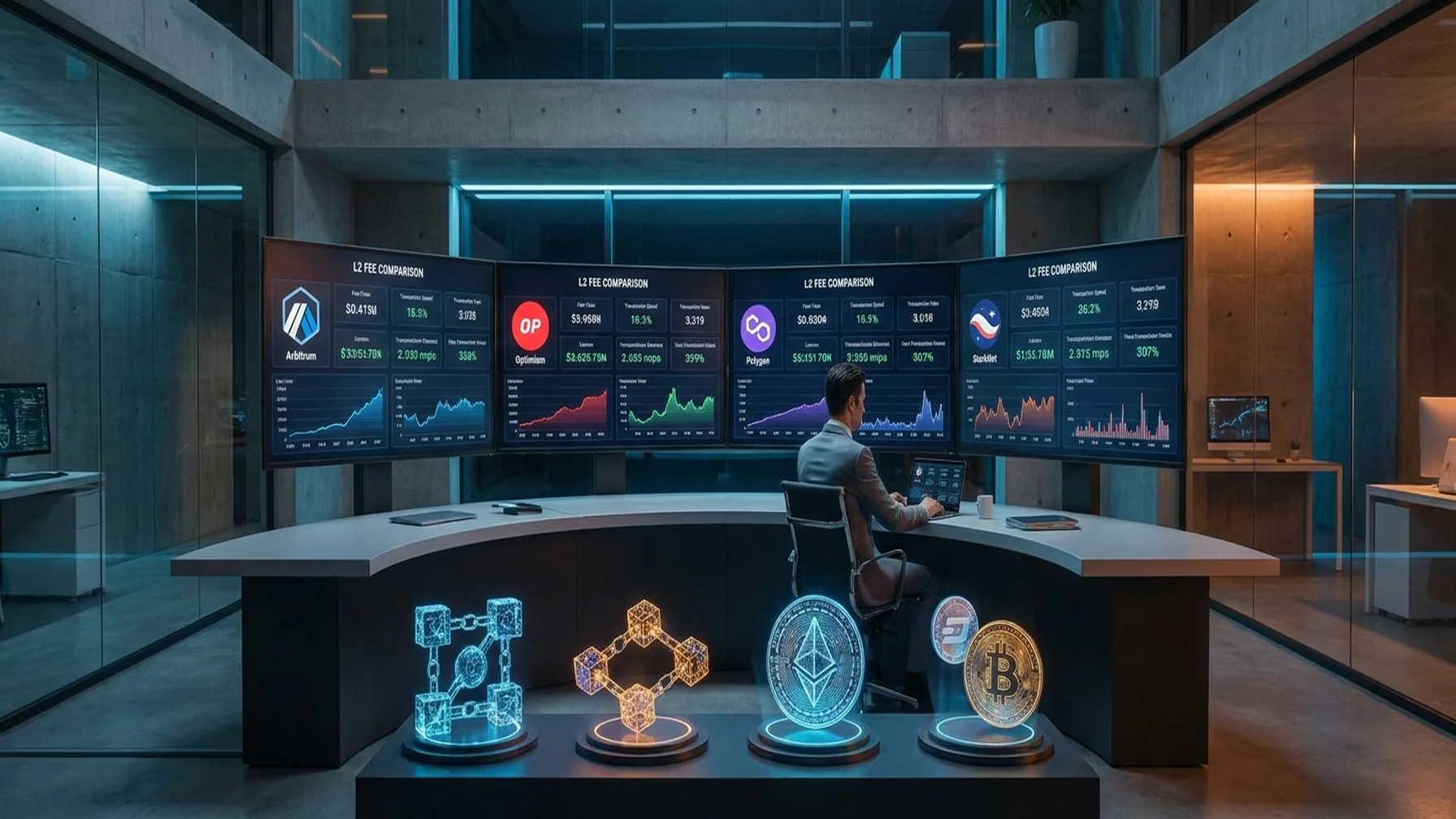
Arbitrum and Optimism are well-known optimistic rollup solutions. Arbitrum often offers lower fees through its compression techniques, while Optimism prioritizes Ethereum compatibility, sometimes resulting in slightly higher costs.
zkSync and StarkNet
zkSync and StarkNet leverage ZK rollup technology. zkSync is known for its low fees and fast transaction finality, making it appealing for cost-sensitive users. StarkNet provides enhanced security features via its STARK technology, which can lead to slightly higher fees.
Polygon zkEVM and Scroll Blockchain
Polygon zkEVM combines Ethereum's security with ZK rollup efficiency, balancing low fees with high throughput. Scroll Blockchain focuses on privacy and scalability, often resulting in competitive fees.
Factors Influencing Layer 2 Fees
When comparing fees across Layer 2 solutions, several key factors can impact costs. These include:
- Transaction fees: Different Layer 2 solutions have varying fee structures.
- Transaction speed: Faster transactions can influence the user experience and operational costs.
- Scalability: The ability to handle many transactions can affect fees.
- Network congestion: Fees may fluctuate with demand.
- Security model: More secure solutions might incur higher fees.
Understanding these factors can help users decide which Layer 2 solution is the best fit for their needs based on fees and performance.
Comparing Layer 2 Fees: A Detailed Look
Here's a general comparison of fees across popular Layer 2 solutions:
Average Fee Comparison Table
| Layer 2 Solution | Average Fee (in USD) | Security Model |
|---|---|---|
| Arbitrum | $0.10 - $0.50 | Optimistic Rollup |
| Optimism | $0.15 - $0.60 | Optimistic Rollup |
| zkSync | $0.05 - $0.30 | ZK Rollup |
| StarkNet | $0.08 - $0.40 | ZK Rollup |
| Polygon zkEVM | $0.06 - $0.35 | ZK Rollup |
This table offers a broad overview, but actual costs may vary based on transaction complexity and network conditions. Users should consider both fees and security models when choosing a Layer 2 solution.
Why Layer 2 Solutions Are More Cost-Effective Than Layer 1
Layer 2 solutions provide a more affordable alternative to Layer 1 networks by processing transactions off-chain. This reduces the load on the main chain, leading to lower fees and faster transaction times. Although Layer 1 networks like Ethereum offer robust security, they come with higher transaction costs.
Choosing the Right Layer 2 Solution: An Ordered Approach
When selecting a Layer 2 solution, it's crucial to weigh various aspects beyond fees. Follow these steps to make an informed decision:
- Identify your transaction needs: Consider the types of transactions you'll perform.
- Evaluate security requirements: Decide on the level of security necessary for your operations.
- Consider compatibility: Ensure the solution works well with your existing applications.
- Analyze fee structures: Compare the fees of different solutions based on your expected usage.
- Assess scalability: Choose a solution that can handle your transaction volume.
By following this approach, you can select the best Layer 2 solution that balances cost, security, and compatibility.
Conclusion: Staying Informed in a Dynamic Landscape
Comparing fees across Layer 2 solutions involves considering various factors, including cost, security, and compatibility. ZK rollups often provide lower fees but may have compatibility limitations, whereas optimistic rollups offer broader application support. As the Layer 2 ecosystem evolves, staying informed about these aspects is essential for making the best choice for your needs.